Identify
What matters most?
Know your devices, accounts, data, and essential services.
Think: customer records
A small team deserves a serious security plan.
Start with a clear picture, not a wall of jargon.
Informed by NIST CSF 2.0Practical. Plain-language. Open to everyone.
The big picture
Not six steps to finish once.
Keep returning to each part.
Govern
Name a security owner. Set priorities, responsibilities, and supplier expectations.
Guides every part belowIdentify
Know your devices, accounts, data, and essential services.
Think: customer records
Protect
Use multi-factor sign-in, updates, limited access, and backups.
Think: business email
Detect
Monitor suspicious activity and make reporting easy.
Think: unusual logins
Respond
Plan incident roles, contacts, and communications before trouble.
Think: a call list
Recover
Test restoration, prioritize essential work, and learn from incidents.
Think: restoring a file
An original HAWKiTECH explanation of the six NIST CSF functions. This is a starting point, not a certification or a complete security assessment.
Make a start
Entries stay in this page; they are not sent or saved. Avoid passwords and sensitive details.
Checked boxes record your discussion, not your security level. Your priorities depend on your business and its risks.
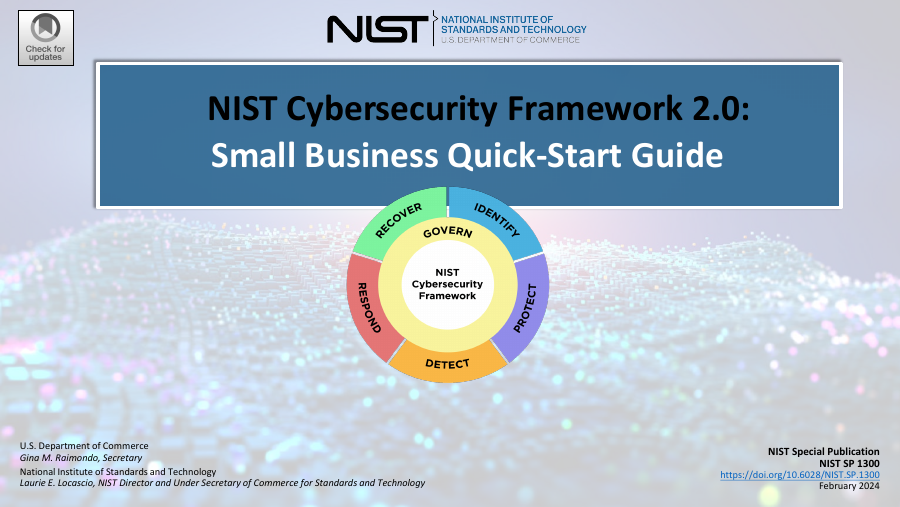
Go straight to the source
Our aim is to make technology capabilities and security accessible to small organizations with limited resources. Useful knowledge belongs out in the open.
Source: NIST SP 1300, Small Business Quick-Start Guide, February 2024. Editorial review: September 29, 2026.
Read the original guide (PDF)Independent educational content by HAWKiTECH. No NIST affiliation or endorsement. The framework is voluntary; this page does not establish compliance.
Keep learning
A conversation about your business
Bring your questions and your priorities.